A printed fence screen can be perfect on paper and still get pulled off the fence by an inspector on day one. The reason is almost always the same: the material has no flame-resistance certificate, or the certificate does not match what the fire code on that project actually requires. On construction sites, event perimeters, and many public venues, flame resistance is not an upgrade you choose for peace of mind. It is a line item the authority having jurisdiction can enforce, and understanding the standard behind it keeps a job from stalling at inspection.
What NFPA 701 actually tests
The standard most codes point to for temporary fabrics and films is NFPA 701, a test method that has been around since 1938 and is revised on a regular cycle. It does not certify that a material is fireproof. It measures flame propagation, meaning how readily a flame spreads across the fabric once an ignition source is removed. A screen that passes will self-extinguish rather than carry fire along a fence line, which is exactly the behavior a fire marshal cares about when a windscreen wraps hundreds of linear feet of perimeter.
Because editions are year-stamped, the specific version matters. A material that passed an older edition is not automatically compliant with a newer one, so the certificate you keep on file should name both the standard and its edition, and it should describe the exact material that is hanging on your fence.
Method 1 versus Method 2, and why screens use Method 2
NFPA 701 contains two test methods that are not interchangeable. Test Method 1 is built for lightweight, single-layer textiles such as drapery and curtain fabrics. Test Method 2 uses a larger specimen and different apparatus and is the one written for heavier materials: vinyl-coated fabrics, plastic films, banners, awnings, and membrane or temporary enclosures. A printed vinyl mesh fence screen or a coated windscreen falls squarely in Method 2 territory, so a certificate that only references Method 1 is testing the wrong class of material for this application. This is one of the most common reasons a screen fails a paperwork check even when the fabric itself would have passed: the test was run, but on the wrong method for the product. When you request certification, name the material type as well as the standard, so the laboratory result describes the coated mesh you are actually installing rather than a lighter fabric that happens to share a product line.
Reading a pass: the three limits
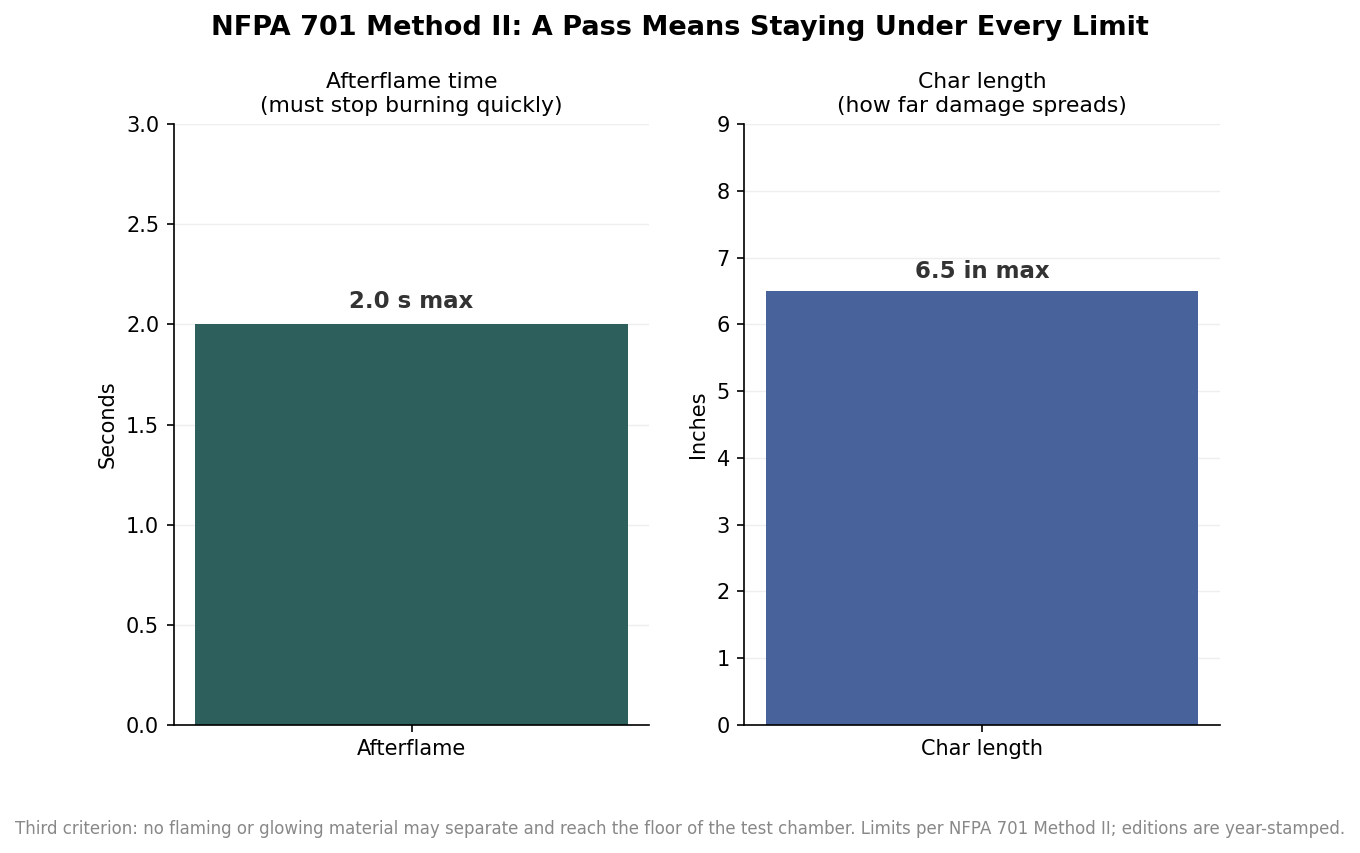
Under Method 2, a specimen passes only if it stays inside three boundaries at once. The afterflame time, the interval the material keeps burning after the flame is withdrawn, must stay under two seconds. The char length, how far the damage travels along the specimen, must stay under 6.5 inches. And no flaming or glowing piece may break away and reach the floor of the test chamber, because burning debris is its own ignition hazard. Missing any one of the three is a failure, which is why “it looked like it self-extinguished” is not the same as a documented pass. The value of the certificate is that a laboratory measured all three, on a real specimen, under a controlled ignition, and recorded numbers rather than an impression. That paper trail is what an inspector can accept without having to trust a visual judgment made in the field, and it is why keeping the certificate physically on site, rather than in an email thread, saves time when someone official asks to see it.
Treated versus inherently flame resistant
Two screens can both carry a passing result and still age very differently. A topically treated material gets its flame resistance from a chemistry applied to the surface, and outdoor exposure, rain, and cleaning can gradually diminish it. An inherently flame-resistant material builds the property into the fiber or film, so it holds up better over a long deployment. This distinction is why some jurisdictions ask for more than a one-time test result; a fire marshal may want evidence that the flame resistance will survive the planned service life of the installation, not just the day it was manufactured. When a screen will hang through a multi-year build, ask which type you are buying and what the manufacturer says about weathering, and confirm that outdoor UV inhibitors are part of the same specification so the graphic and the protection last together.
Where the requirement comes from, and how to specify around it
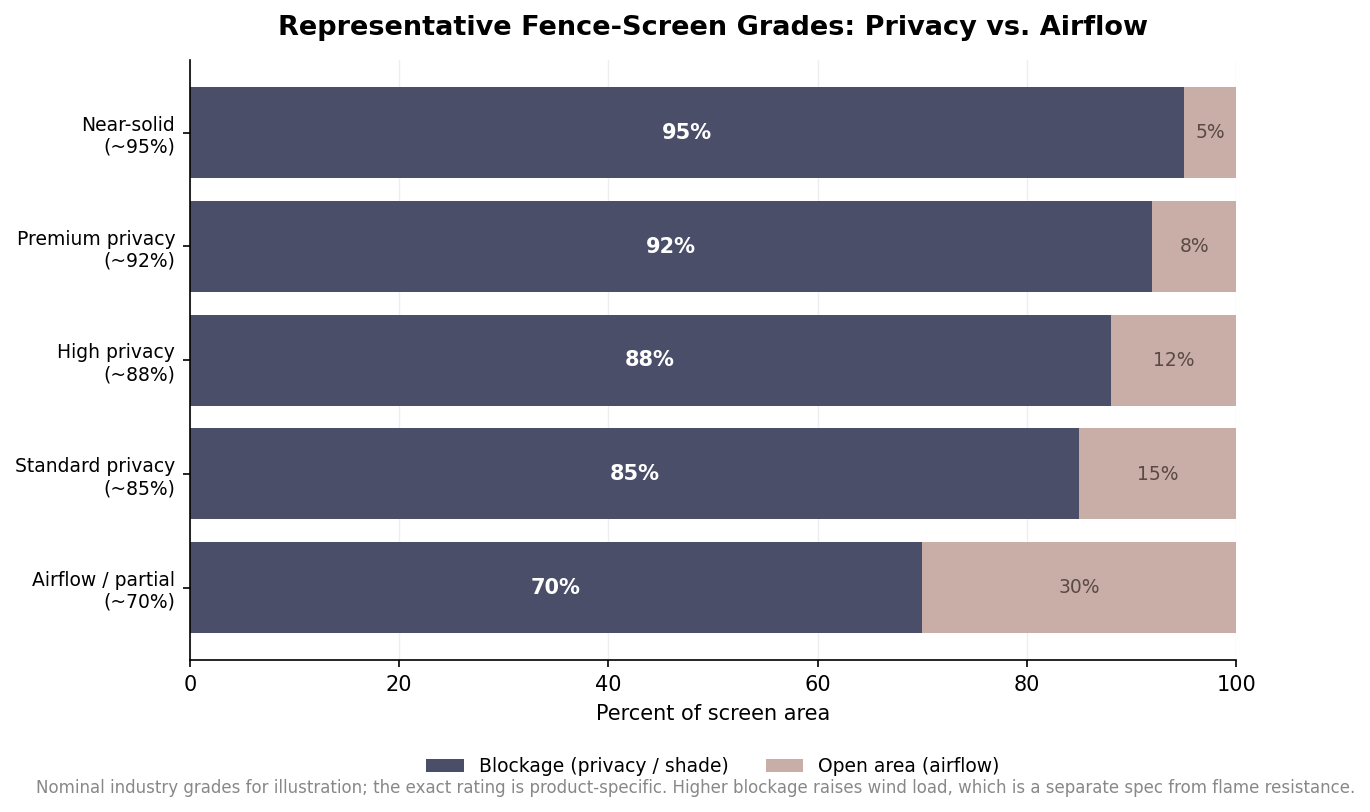
Flame resistance rarely arrives as a standalone rule. On a job site it usually sits under a broader framework such as NFPA 241, the standard for safeguarding construction, alteration, and demolition operations, which pushes a fire-prevention program onto temporary sites, with the local fire code and inspector filling in the specifics. Practically, that means the two decisions you make for privacy and wind are separate from the one you make for fire. First choose a blockage grade for the sightline and airflow the site needs, remembering that a higher blockage percentage also raises the wind load the fence has to carry. Then require, in writing, an NFPA 701 Method 2 certificate for the exact material and edition, keep a copy on site, and confirm the flame resistance is durable enough for how long the screen will hang. Handle those as distinct line items on the order and the screen clears inspection instead of coming down.
Leave a Reply