The most common custom fence screen mistakes are measuring the wrong part of the fence, picking solid vinyl for a windy site, sending a low-resolution logo and approving a proof too quickly. Custom Fence Screens catches many of these during the free 24-hour mockup, but knowing them before you request a quote keeps your fence screens right the first time.
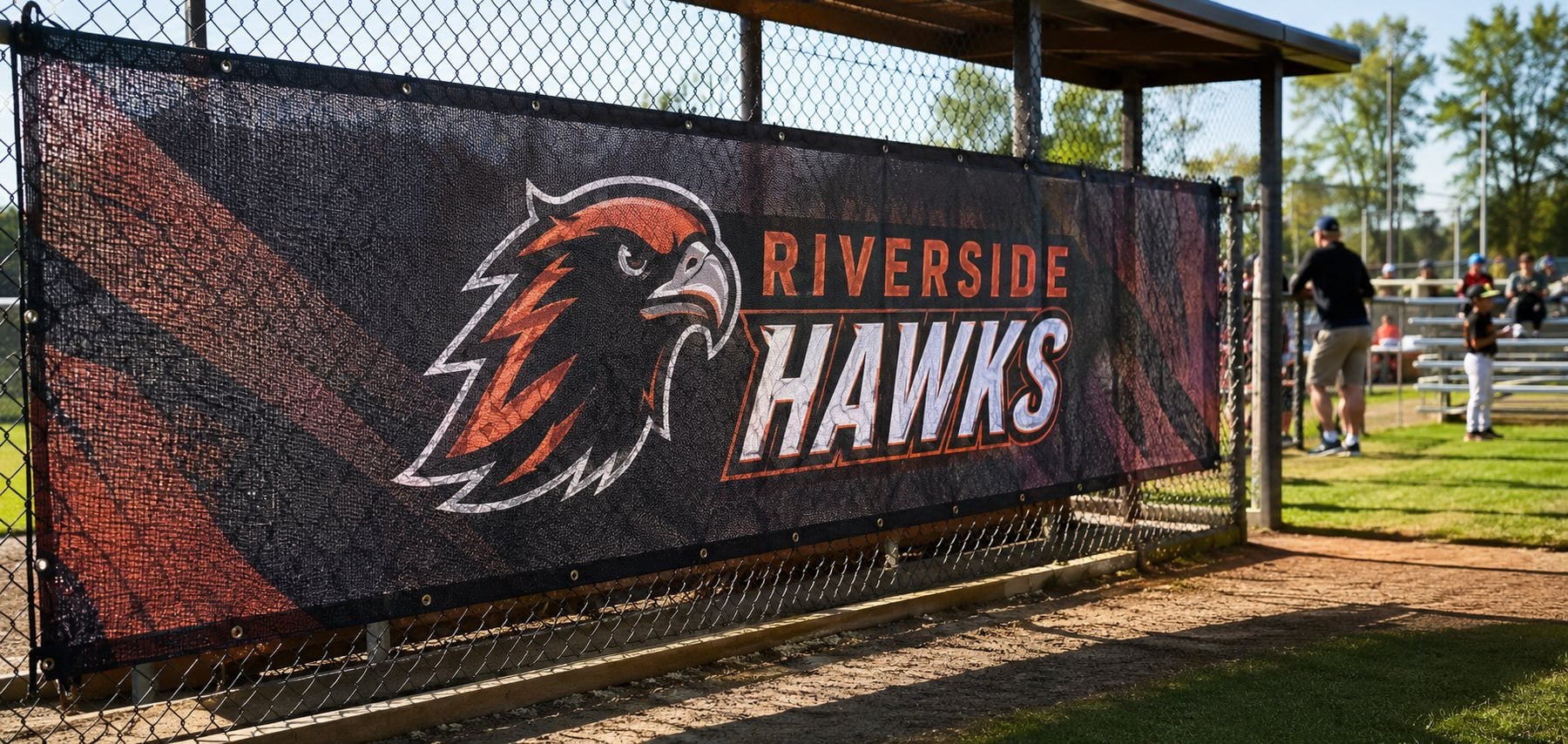
- Free mockup within 24 hours, with unlimited free revisions
- Minimum order of 12 fence screens
- Standard production about 2 weeks after design approval
- You pay nothing until you approve the design
What is the most common mistake on a first custom fence screen order?
The most common mistake on a first custom fence screen order is measuring the wrong thing. Buyers often measure the total length of a property line, or the height of the posts, instead of the actual chain-link fabric sections the screens will hang on. The result is fence screens that leave gaps at the ends, overlap a gate or ride above the top rail.
Fence lines are rarely one uninterrupted run. Corner posts, gates, terminal posts and changes in grade all break a fence into separate spans, and each span is its own measurement. A screen that looks perfect on a sketch can bunch at a corner or block a gate latch once it is zip-tied in place.
Before you request a quote from Custom Fence Screens, walk the fence and write down each section separately:
- Each span between posts or gates, not the overall property length.
- The fabric height, from just above the bottom of the chain-link to just under the top rail.
- Every gate, and whether it swings, slides or stays locked.
- Slopes or steps where the fence follows the ground.
Share those notes with your quote request. The mockup will show how the panels break across the fence, which is far easier to fix on screen than on site.
Why does choosing the wrong material cause fence screen problems?
Choosing the wrong material is the second most expensive fence screen mistake because it shows up after installation, when the fix is a reorder. Solid vinyl and mesh behave very differently in wind, and a screen that suits a short pool fence can strain a tall fence line on an open construction lot.
Custom Fence Screens offers several distinct styles, and each one has a job it does best:
| Style | Best for | Watch out for |
|---|---|---|
| Full-color printed mesh banner | Sponsor walls, branding and graphics on exposed fences | Very fine detail reads softer on mesh than on vinyl |
| Solid privacy mesh screen | Privacy and a clean look around pools, courts and yards | Best when you want color and blocking, not full artwork |
| Heavy-duty PVC vinyl fence banner | Sheltered areas, short runs and close-up viewing | Catches far more wind on tall or open fences |
| Construction site windscreen | Dust, debris and branding on job-site perimeters | Needs secure fastening at every grommet |
The question to ask is not which style looks best in a photo, but how exposed the fence is. Open fields, hilltops and lots next to wide roads see more wind than courtyards and backyards. If you are unsure, describe the site in your quote request and Custom Fence Screens will suggest the style that fits it.
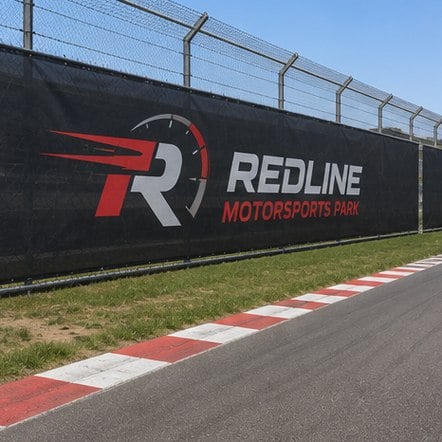
Can a low-resolution logo ruin a printed fence screen?
A low-resolution logo can absolutely ruin a printed fence screen, because a file that looks crisp in an email signature has to stretch across a panel meant to be read from a parking lot or the far side of a field. Pixel blur, jagged edges and muddy colors all grow with the print size.
The safest artwork for fence screens is vector: an AI, EPS, SVG or a PDF exported from design software. Vector files scale cleanly to any size. If all you have is a JPG or PNG pulled from a website, send it anyway and say so, because the Custom Fence Screens design team can flag whether it will hold up and, in many cases, rebuild a simple mark.
Other artwork problems that appear on first orders:
- Too much text. Long slogans, addresses and fine print disappear at a distance. One message per panel reads best.
- Thin fonts. Script and hairline typefaces fade on mesh. Bold, simple letterforms survive.
- Low contrast. Gray on gray or navy on black blends together outdoors.
- Off-brand colors. Share your brand color codes so the mockup can match them.
Fixing any of these is free during the mockup stage, since every order includes unlimited free revisions.
How do rushed proof approvals lead to fence screen reprints?
Rushed proof approvals lead to fence screen reprints because small errors are invisible on a phone screen and enormous on a fence. A misspelled sponsor name, an old phone number or a logo from a previous rebrand is easy to miss when you glance at a mockup between meetings.
Custom Fence Screens returns a free mockup within 24 hours, and you pay nothing until you approve the design. That speed is an advantage only if the approval step gets proper attention. Treat the mockup like a contract you are signing.
- Open the proof on a large screen or print it, and zoom into every line of text.
- Read every name, number and web address aloud, letter by letter.
- Check each sponsor or partner logo against the version they sent you most recently.
- Confirm the panel count and sizes against your fence measurements.
- Get one final decision-maker to approve, so late comments do not arrive after production starts.
Once a design is approved, production begins and the standard turnaround is about 2 weeks. Anything caught before that click costs nothing to change. Anything caught after it usually means new panels.
What goes wrong when fence screens are installed?
Fence screens most often go wrong at installation when they are pulled too tight, fastened at too few points or hung before the fence itself is finished. Even a perfectly printed screen can sag, flap or tear at the grommets if the hardware step is rushed.
Common installation mistakes include:
- Skipping grommets. Every grommet carries part of the load. Leaving some empty concentrates wind force on the rest.
- Over-tightening zip ties. A screen stretched drum-tight has no give in a gust. Snug is better than strained.
- Starting in the middle. Fasten one end, work along the top edge, then the bottom, so the print stays level.
- Hanging on an unfinished fence. If posts or rails are still being adjusted, the screen will shift with them.
- Ignoring the gate. A screen that crosses a gate hinge will bunch or tear the first time the gate swings.
The Custom Fence Screens how it works page walks through the full ordering process, and the site’s installation guide covers fasteners and spacing in more detail. If your crew has not hung fence screens before, share the install plan when you approve the mockup so any questions come up early.
Is ordering exactly the number of fence screens you need a mistake?
Ordering exactly the number of fence screens you need, with no thought for repairs, is a quiet mistake that shows up months later. A screen torn by a mower, a vehicle or vandalism leaves a visible gap in an otherwise matched fence line, and a single replacement panel takes the same production time as a full order.
Custom Fence Screens has a minimum order of 12 fence screens, and many buyers order well above that for long fence lines or multiple fields. Whether you add spares depends on how exposed the fence is:
- Sports fields see foul balls, maintenance carts and crowds leaning on the fence.
- Construction sites see equipment, deliveries and fence sections moved between phases.
- Pools, courts and HOA common areas are gentler, but a spare still keeps the look uniform.
A related mistake is changing the design between orders without meaning to. Keep the approved mockup file and the exact panel list, so a reorder matches the original. Custom Fence Screens can match a previous batch, but only if you can tell the team which design and which sizes you want repeated.
How can you avoid fence screen mistakes before you request a quote?
The simplest way to avoid fence screen mistakes is to gather four pieces of information before you request a quote: your fence measurements by section, a description of the site’s wind exposure, your best available artwork and your install date. With those in hand, the mockup stage becomes a check rather than a guessing game.
Use this short checklist before you contact Custom Fence Screens:
- Measure each fence span and the fabric height, and note every gate.
- Describe the site: open field, construction lot, pool deck, court or backyard.
- Collect the highest-resolution logo you have, plus any sponsor or partner files.
- Decide who gives final approval on the design.
- Set an install date and work backward from it, leaving room for production and delivery.
Then request a custom quote. You will see a free mockup within 24 hours, you can revise it as many times as you need, and you pay nothing until the design is right. If your project is a storefront launch, the guide to custom fence screens for grand openings covers the extra details that matter for opening day.
Frequently asked questions
How should a chain-link fence be measured before ordering custom fence screens?
Custom fence screens should be measured section by section, using the length of each chain-link span between posts or gates and the height of the fabric itself rather than the posts. Write down every gate, corner and slope separately. Custom Fence Screens uses those notes to lay out the panels in the mockup, which makes gaps and overlaps easy to spot before anything is printed.
Can fence screens be hung across a gate that opens and closes?
Fence screens should not run continuously across a swinging or sliding gate, because the screen will bunch, strain or tear the first time the gate moves. Order a separate panel sized to the gate itself, or leave the gate uncovered. Note every working gate in your quote request so Custom Fence Screens can plan the panel breaks around it in the free mockup.
What causes a fence screen to rip at the grommets?
A fence screen usually rips at the grommets when too few fastening points carry the wind load, when zip ties are pulled drum-tight or when a heavy solid material is used on an exposed fence. Fasten every grommet, keep ties snug rather than strained and match the material to the site. Mesh styles let wind pass through far more easily than solid vinyl does.
Is solid vinyl a poor choice for a tall fence in an open area?
Solid vinyl fence banners catch much more wind than mesh, so they can be a poor choice on tall fences in open fields, hilltops or wide lots. Vinyl works best on sheltered or shorter runs where viewers stand close. For exposed fence lines, Custom Fence Screens usually suggests a printed mesh or windscreen style that lets air move through the fabric.
Should I approve a fence screen mockup on my phone?
Approving a fence screen mockup on a phone is risky, because small typos, outdated logos and wrong phone numbers are hard to see on a small display. Open the proof on a large monitor or print it, then zoom into every line of text. Custom Fence Screens offers unlimited free revisions, so take the time to check everything before you approve the design.
Can a misprint on a fence screen be corrected after the panels are delivered?
A misprint on a fence screen generally cannot be corrected on the existing panel, since the artwork is printed into the material. The fix is a replacement panel, which goes through production again. Catching errors early saves that wait, which is why Custom Fence Screens asks you to check every detail of the mockup before approving.
Should a fence screen order include spare panels for repairs?
A fence screen order for a busy site often benefits from spare panels, because a single torn screen leaves a visible gap in a matched fence line. Sports fields and construction sites see the most damage from equipment, balls and crowds. Keeping one or two spares on hand means a quick swap instead of waiting for a new production run from Custom Fence Screens.
Why do thin fonts look faded on printed mesh fence screens?
Thin fonts look faded on printed mesh fence screens because mesh has tiny open spaces between its fibers, and hairline strokes fall partly into those gaps. Bold, simple letterforms with thick strokes stay solid and readable from a distance. If your brand uses a delicate typeface, the design team can suggest a heavier companion font for the fence screen layout.
Can fence screens block a sight line a property needs to keep open?
Fence screens can block important sight lines at driveway exits, crosswalks, pool gates or playground entrances, which may create safety concerns. Before ordering, walk the fence and mark any spots where drivers, lifeguards or staff need to see through. Leave those sections unscreened or choose a lighter mesh, and mention them in your quote request so the mockup reflects them.
Is it a mistake to install fence screens before the fence is finished?
Installing fence screens before the fence is finished is a common mistake, because posts and rails that are still being adjusted will pull the screens out of line or loosen the fasteners. Wait until the fence is complete and tensioned. Custom Fence Screens can schedule your order around the fence contractor's timeline so the panels arrive when the fence is ready for them.
How do I make sure a fence screen reorder matches the first batch?
A fence screen reorder matches the first batch most reliably when you keep the approved mockup file, the exact panel sizes and the material style from the original order. Share those details when you request the reorder. Custom Fence Screens can then reproduce the same design, so new panels sit next to older ones on the fence without an obvious mismatch.
What should I tell Custom Fence Screens about my site to avoid the wrong fence screen style?
Fence screen style choices go wrong when the supplier does not know the site, so describe how exposed the fence is, how tall it is, who will view it and from how far away. Mention nearby open fields, roads or water. Custom Fence Screens uses that description to suggest mesh, privacy mesh, windscreen or vinyl, then shows the result in a free mockup.
Get a free mockup for your fence screens
Send your logo or idea and the quantity you have in mind. Custom Fence Screens returns a free mockup within 24 hours, you approve the design before anything is produced, and standard turnaround is about two weeks with faster options available. Get a custom quote.